


Web App vs Mobile App: A Clear Guide for Business Owners (Not Developers)
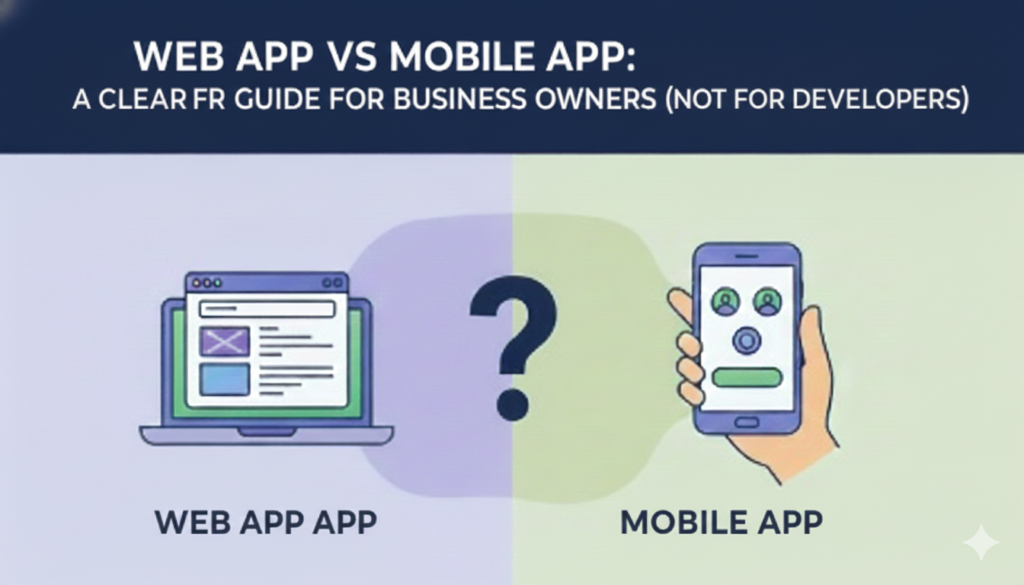
When companies start thinking about digitalizing or building a new product, one of the first big questions is:
“Should we build a web app or a mobile app?”
Many business owners feel pressured into choosing mobile because “everyone uses apps”. Others assume web apps are cheaper, so they pick them by default.
The truth is:
neither option is inherently better — it depends entirely on the business case.
This article explains, in simple business language, the difference between the two, when each makes sense, and how WaveIT helps companies choose the right approach.
- What is a web app? (Simple explanation)
A web app is software you access in a browser:
- Chrome
- Safari
- Firefox
- Edge
You don’t download anything. Users simply open it via a link.
Examples:
- online dashboards
- booking systems
- CRMs
- ecommerce back-office
- internal platforms
- portals for clients
Web apps are accessible from any device, require no installation, and are easier (and cheaper) to update.
- What is a mobile app?
A mobile app is software you install from:
- Apple App Store
- Google Play
It’s built specifically for phones and can use phone-specific features like:
- camera
- GPS
- push notifications
- offline mode
- background activity
Mobile apps feel more integrated and allow deeper interaction with the user.
- Key differences (from a business perspective, not technical)
- User Experience
- Web app: great for detailed tasks, dashboards, forms, portals.
- Mobile app: great for quick, frequent, on-the-go interactions.
- Development Cost
- Web app: usually cheaper; one codebase covers all devices.
- Mobile app: more expensive; you typically need two versions (iOS + Android).
- Speed & Performance
- Web app: fast, but depends on browser limitations.
- Mobile app: faster, smoother, optimized for phone hardware.
- Installation
- Web app: no installation → instant access.
- Mobile app: installation required → more friction, but stronger engagement afterward.
- Updates
- Web app: update once → instantly live for everyone.
- Mobile app: updates must pass store approval (especially on iOS).
- User Engagement
- Web app: users come when they need something.
- Mobile app: push notifications → significantly higher retention.
- Offline Use
- Web app: limited.
- Mobile app: can work partially or fully offline.
- When a web app is the right choice
Choose a web app if:
✔ Your users need complex workflows
Examples:
- admin dashboards
- financial modules
- document processing
- HR management
- logistics operations
Web apps are perfect for detailed tasks.
✔ You want the fastest and most cost-efficient launch
One build → works everywhere.
✔ Your product will be used mostly on desktop
Many B2B platforms fall in this category.
✔ Your app is not used daily
A user won’t download something they only need occasionally.
✔ You want to iterate quickly
Changes go live immediately — no app store delays.
- When a mobile app is the right choice
Choose a mobile app if:
✔ Your users interact very frequently
Daily or weekly use benefits from:
- push notifications
- fast access
- high engagement
✔ You need smartphone-native features
Like:
- QR scanning
- GPS & location
- camera uploads
- offline access
- step tracking
- local storage
✔ You want a premium user experience
Mobile apps feel smoother and more “serious.”
✔ Your brand wants visibility on user screens
An icon on the home screen is powerful branding.
✔ The product itself is a mobile-first concept
Examples:
- food delivery
- ride-sharing
- fitness tracking
- mobile banking
- event check-in
- field workforce tools
- The hybrid approach: both web + mobile
Many companies eventually need both, but not at the same time.
Typical roadmap WaveIT uses:
- Start with a web app (faster + cheaper validation)
- Grow until the product reaches market fit
- Add a mobile app for engagement, notifications, or specific features
This reduces risk and keeps investment under control.
- How WaveIT helps you choose the right option
We don’t start by guessing.
We start with a structured analysis of:
- who your users are
- where they use the product (desktop, mobile, on field, at office)
- how often they interact
- what features they need
- what your budget and timeline allow
- what the long-term growth path looks like
Then we recommend:
- web app
- mobile app
- or a hybrid roadmap
The result?
You build exactly what your business needs — nothing more, nothing less.
There is no universal answer to the “web vs mobile” question.
But here’s the golden rule:
🔹 If usage is occasional → build a web app.
🔹 If usage is frequent → build a mobile app.
🔹 If you want fast validation → start with web.
🔹 If user engagement is critical → go mobile.
With the right strategy and a clear roadmap, your product can grow efficiently without wasting budget or time.
WaveIT can guide you through the entire decision-making process and build the right solution from day one.


